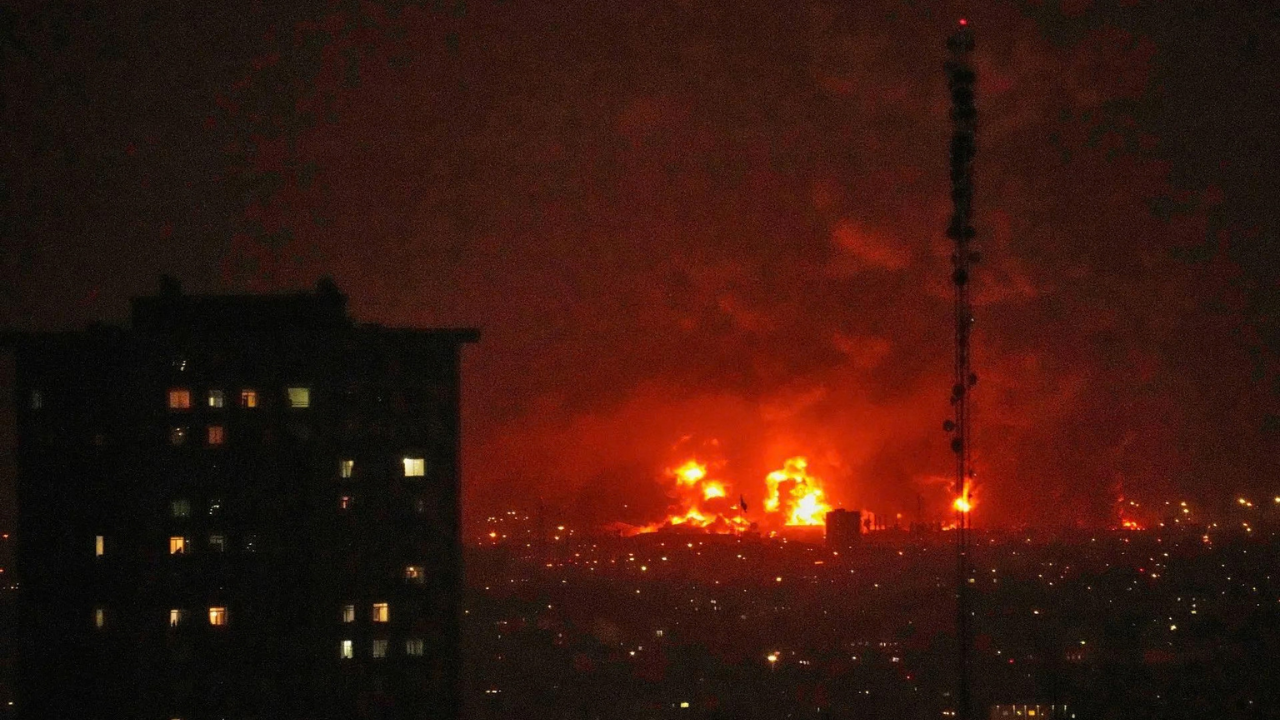
Israel's surprise strike on Iranian oil facilities has sent shockwaves through global energy markets and raised questions about the implications of such an action for US-Israel relations and the fragile balance of power in the region.
A Surprising Move: Israel Strikes Iranian Oil Facilities
The White House was reportedly taken aback by Israel's decision to strike Iranian oil facilities, with a senior official allegedly sending a message that conveyed surprise and disapproval. The Trump administration had been aware of tensions between Iran and Israel but had not anticipated such a provocative move.
According to reports, the strikes targeted facilities in the Khuzestan province, which are used to process crude oil into more valuable petroleum products. While Israel claimed the depots supplied the Iranian regime, Washington expressed strong disagreement with the action, citing concerns about rising gas prices and potential retaliation against American interests.
The surprise attack has raised eyebrows among analysts, who question why Israel would choose such a high-profile target without consulting its allies. "This is not a move that was expected from Israel," said Dr. Max Rodenbeck, an expert on Middle East politics at the German Institute for International and Security Affairs. "It's a very unusual action, especially considering the delicate situation with Iran right now."
The Historical Context of Iranian-Israeli Tensions
Iran and Israel have been engaged in a long-standing struggle over influence in the Middle East, dating back to the 1979 Islamic Revolution. The two countries have clashed on numerous occasions, including over issues such as Palestine, Lebanon, and Iraq.
Under President Donald Trump, tensions between Iran and Israel increased significantly. In May 2018, the US withdrew from the Joint Comprehensive Plan of Action (JCPOA), a landmark nuclear deal with Iran negotiated by the Obama administration. The move marked a significant shift in US policy towards Iran and led to a surge in tensions between Tehran and Jerusalem.
Israel has long seen Iran as a major threat, citing its alleged plans to develop nuclear weapons and support proxy groups such as Hezbollah and Hamas. In recent years, Israel has taken efforts to degrade Iranian capabilities, including through airstrikes and cyber attacks.
The Reaction of the White House
Washington's response to the attack was swift and decisive. A senior official reportedly sent a message that conveyed surprise and disapproval, with concerns about rising gas prices and potential retaliation against American interests.
"The US government is deeply concerned about this situation," said a spokesperson for the National Security Council. "We are in close touch with our Israeli partners and will continue to monitor the situation closely."
Concerns About Global Energy Markets
Analysts warn that the strikes could have significant implications for global energy markets, potentially leading to higher gas prices and increased volatility.
"This is a very unstable region," said Dr. Fatih Ozel, an expert on Middle East politics at the Harvard University's Belfer Center for Science and International Affairs. "The impact of this attack will be felt in many parts of the world, particularly those that rely heavily on oil imports from Iran."
Future Implications: A Delicate Balance of Power
The situation in the Middle East is becoming increasingly complex, with multiple players vying for influence and power.
"This attack has highlighted the delicate balance of power in the region," said Dr. Rodenbeck. "It's a reminder that in this part of the world, things can change very quickly."
A Call for Caution: Analysts Weigh In
Experts urge caution and restraint on all sides, emphasizing the need to avoid miscalculations and unintended consequences.
"We must be careful not to escalate the situation," said Dr. Ozel. "This is a region where miscalculation can have devastating consequences."
A Call for Reader Perspective: What Do You Think?
As the situation in the Middle East continues to unfold, one thing remains certain: the views and opinions of people like you matter.
"We want to hear from our readers," said a spokesperson. "What do you think about Israel's attack on Iranian oil facilities? Share your thoughts with us."
Comments