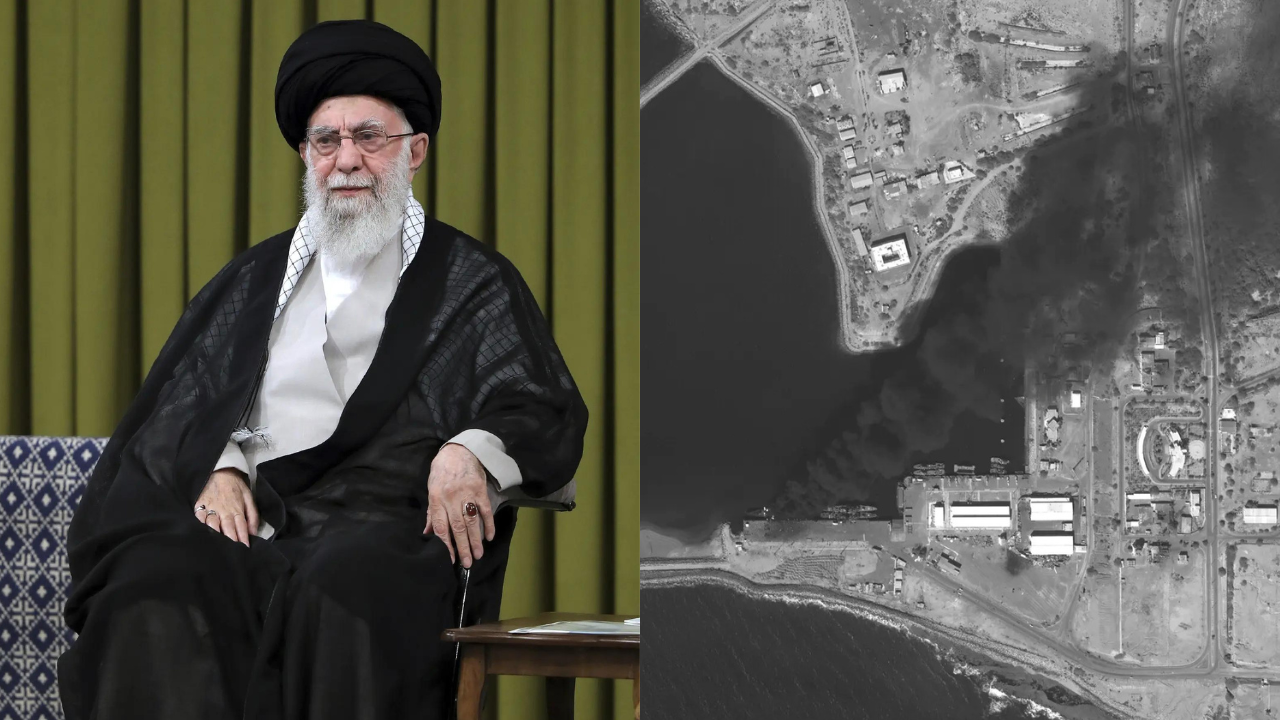
In a shocking turn of events, Iran's Supreme Leader Ayatollah Khamenei was reportedly killed in a pre-emptive US-Israel airstrike on Saturday, dubbed 'The Epic Fury'. This operation, which was carefully planned and executed, has sent shockwaves around the globe, leaving many to wonder about the implications of such a dramatic escalation. The strike, which was timed to coincide with a top leadership meeting, aimed to maintain surprise and catch the Iranian leaders off guard. As the news of the strike spread, many began to speculate about the reasons behind the choice of Saturday as the day for the operation.
According to sources, the operation was the result of months of planning and increased US military presence in the region. The US and Israel had been monitoring the situation in Iran closely, looking for the perfect moment to strike. The fact that the strike was carried out on a Saturday, a day when many people in the Western world are off work, has raised questions about the timing of the operation. Some have speculated that the choice of Saturday was intended to minimize the impact on global markets and to reduce the risk of retaliation from Iran.
However, others have pointed out that the choice of Saturday may have been driven by more strategic considerations. For example, a Saturday strike may have been seen as a way to catch the Iranian leaders off guard, as they may have been less expecting an attack on a weekend day. Additionally, a Saturday strike may have given the US and Israel a window of opportunity to assess the situation and prepare for any potential retaliation before the start of the new week.
The Role of AI in the Strike
The use of Artificial Intelligence (AI) in the planning and execution of the strike has also been a topic of interest. According to reports, the US and Israel used advanced AI algorithms to gather intelligence and plan the operation. The AI systems were used to analyze vast amounts of data, including satellite images, communications intercepts, and other forms of intelligence. This allowed the US and Israel to build a detailed picture of the Iranian leadership's movements and patterns, which was used to plan the strike.
The use of AI in the strike has raised questions about the role of automation in modern warfare. While AI can be a powerful tool for gathering intelligence and planning operations, it also raises concerns about the potential for unintended consequences. For example, if an AI system is used to plan a strike, there is a risk that the system may misinterpret or misanalyze the data, leading to a faulty plan. Additionally, the use of AI in warfare raises ethical concerns, as it can be seen as a way to distance humans from the decision-making process and reduce the risk of casualties.
Despite these concerns, the use of AI in the strike is seen as a significant development in the field of military technology. The ability to use AI to plan and execute complex operations is a major advantage, and it is likely that we will see more of this in the future. As the technology continues to evolve, it is likely that we will see AI playing an increasingly important role in military planning and operations.
Reactions to the Strike
The strike has been met with a mix of reactions from around the world. While some have praised the operation as a bold and necessary move, others have condemned it as a reckless and dangerous escalation. The Iranian government has vowed to retaliate against the US and Israel, and there are concerns about the potential for a wider conflict in the region.
The US and Israel have defended the strike, saying that it was necessary to prevent Iran from developing nuclear weapons and to protect regional stability. However, others have pointed out that the strike may have the opposite effect, and could actually increase the risk of conflict in the region. As the situation continues to unfold, it is clear that the strike has significant implications for global security and stability.
In the wake of the strike, there have been calls for calm and restraint from leaders around the world. The United Nations has issued a statement urging all parties to avoid further escalation and to work towards a peaceful resolution to the conflict. However, with tensions running high, it remains to be seen whether these calls will be heeded.
Key Players in the StrikeThe strike was the result of a joint operation between the US and Israel, and involved some of the most senior leaders in both countries. The operation was reportedly planned and executed by a team of top military and intelligence officials, who used advanced technology and intelligence to carry out the strike.
- The US President was closely involved in the planning and execution of the strike, and gave the final order to proceed with the operation.
- The Israeli Prime Minister was also closely involved, and worked closely with the US to plan and execute the strike.
- The US Secretary of Defense played a key role in the operation, overseeing the military aspects of the strike and working closely with the Israeli military.
- The head of the Israeli military was also involved, and worked closely with the US to plan and execute the strike.
As the news of the strike continues to unfold, it is clear that the operation was the result of a complex and sophisticated plan. The use of AI and other advanced technologies played a significant role in the strike, and highlights the increasing importance of technology in modern warfare. However, the strike also raises important questions about the role of humans in decision-making, and the potential risks and consequences of relying on automation in complex and high-stakes situations.
In the coming days and weeks, it is likely that we will see a significant response from Iran, as well as from other countries in the region. The strike has the potential to destabilize the entire region, and could have far-reaching consequences for global security and stability. As the situation continues to unfold, it is clear that the strike will be a major news story for some time to come, and will continue to dominate headlines around the world.
Implications for the Future
The strike has significant implications for the future of the region, and for the role of the US and Israel in global affairs. The use of AI and other advanced technologies in the strike highlights the increasing importance of technology in modern warfare, and raises important questions about the potential risks and consequences of relying on automation in complex and high-stakes situations.
The strike also raises questions about the role of humans in decision-making, and the potential for unintended consequences when relying on automation. As the technology continues to evolve, it is likely that we will see more of this in the future, and it is important that we consider the potential implications and consequences of relying on AI in military operations.
In the coming years, it is likely that we will see a significant increase in the use of AI and other advanced technologies in military operations. The strike has highlighted the potential benefits of using AI in military planning and operations, and it is likely that other countries will follow suit. However, it is also important to consider the potential risks and consequences of relying on automation, and to ensure that humans are always involved in the decision-making process.
As the news of the strike continues to unfold, it is clear that the operation will have significant implications for the future of the region, and for the role of the US and Israel in global affairs. The use of AI and other advanced technologies in the strike highlights the increasing importance of technology in modern warfare, and raises important questions about the potential risks and consequences of relying on automation in complex and high-stakes situations.
The strike has also highlighted the importance of international cooperation and diplomacy in preventing conflict and promoting peace. The operation has raised tensions in the region, and has the potential to destabilize the entire region. It is therefore important that leaders around the world work together to reduce tensions and promote a peaceful resolution to the conflict.
In conclusion, the strike has significant implications for the future of the region, and for the role of the US and Israel in global affairs. The use of AI and other advanced technologies in the strike highlights the increasing importance of technology in modern warfare, and raises important questions about the potential risks and consequences of relying on automation in complex and high-stakes situations. As the news of the strike continues to unfold, it is clear that the operation will be a major news story for some time to come, and will continue to dominate headlines around the world.
Comments