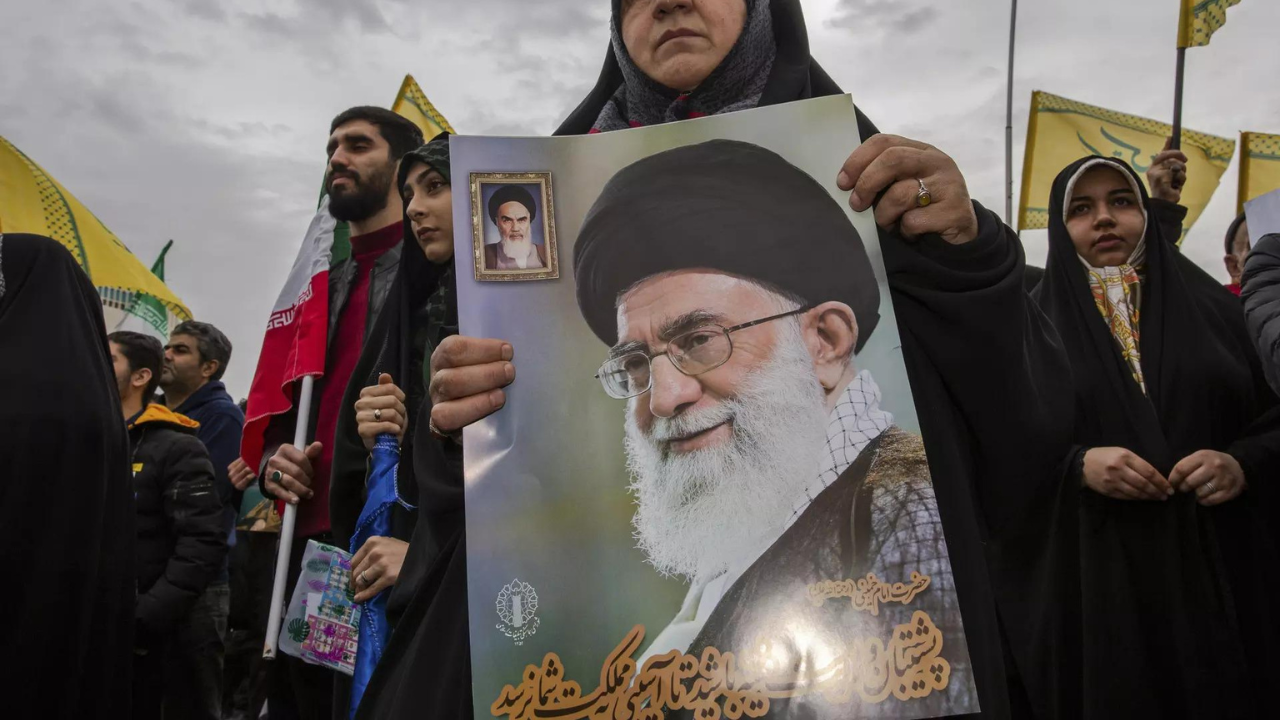
The recent news of the death of Iran's Supreme Leader Ayatollah Ali Khamenei has sent shockwaves around the world, with many wondering what this means for the future of the country. According to US President Donald Trump, Khamenei's death was the result of joint US-Israeli air strikes, which has plunged Iran into a state of uncertainty. As the country navigates this transitional period, many are left asking: after Khamenei, who? The answer to this question lies in the complex process of choosing a new Supreme Leader, a process that is steeped in tradition and guided by the principles of the Islamic Republic.
At the helm of this transitional period are President Pezeshkian and two other high-ranking officials, who will be responsible for guiding the country until a new Supreme Leader is chosen. But who are the potential successors to Khamenei's throne, and what does the future hold for Iran? To understand the succession process, it's essential to delve into the inner workings of the Iranian government and the role of the Supreme Leader. The Supreme Leader is the highest authority in the land, responsible for appointing key officials, including the president, the head of the judiciary, and the commanders of the armed forces.
The Succession Process
The process of choosing a new Supreme Leader is a complex and secretive one, involving the Assembly of Experts, a group of 88 senior clerics who are responsible for selecting the next leader. This assembly is made up of experts in Islamic law and jurisprudence, who are elected by the people for an eight-year term. When a Supreme Leader dies or is incapacitated, the Assembly of Experts convenes to choose a successor, a process that can take anywhere from a few days to several weeks.
The assembly considers a range of factors when selecting a new leader, including the candidate's knowledge of Islamic law, their experience in government, and their commitment to the principles of the Islamic Republic. The candidate must also have the support of at least two-thirds of the assembly members, which can be a challenging hurdle to overcome. Once a new leader is chosen, they are expected to continue the policies and traditions of their predecessor, while also bringing their own unique perspective and vision to the role.
Potential Successors
So, who are the potential successors to Khamenei's throne? One name that has been mentioned is Khamenei's son, Mojtaba Khamenei, who has been involved in politics for many years and has a strong reputation among hardline conservatives. Another potential candidate is Khamenei's grandson, Ali Khamenei, who has been making waves in recent years with his outspoken views on social and economic issues. However, it's worth noting that neither of these candidates has been officially endorsed by the Assembly of Experts, and the succession process is still very much up in the air.
Other potential successors include senior clerics such as Ayatollah Ali Larijani, who has served as the chairman of the Assembly of Experts, and Ayatollah Mahmoud Hashemi Shahroudi, who has been a key figure in the Iranian judiciary. These individuals have a deep understanding of the Iranian system and have the respect and admiration of their peers. However, the succession process is always unpredictable, and it's possible that a dark horse candidate could emerge at the last minute.
Opposition Figures
While the focus is on the potential successors to Khamenei's throne, there are also opposition figures who are advocating for democratic change in Iran. These individuals, who include activists, journalists, and politicians, believe that the current system is outdated and undemocratic, and that it's time for a new approach. They argue that the Supreme Leader should be elected directly by the people, rather than being chosen by a small group of clerics.
One of the most prominent opposition figures is Mir-Hossein Mousavi, who ran for president in 2009 and was a key figure in the Green Movement protests that followed. Mousavi has been a vocal critic of the Iranian government and has called for greater freedoms and human rights. Another opposition figure is Mehdi Karroubi, who has been a longtime advocate for democratic reform and has been imprisoned several times for his activism.
These opposition figures, and others like them, believe that the death of Khamenei presents an opportunity for change in Iran. They argue that the country needs to move away from its authoritarian past and towards a more democratic future, where the rights and freedoms of all citizens are respected. However, this is a challenging and complex process, and it's unclear whether the opposition will be able to achieve their goals.
The Role of AI in Iranian Politics
As Iran navigates this transitional period, it's worth considering the role of artificial intelligence (AI) in the country's politics. AI has the potential to play a significant role in shaping the future of Iran, from analyzing data and predicting outcomes to facilitating communication and collaboration. However, the use of AI in politics is still in its infancy, and it's unclear how it will be used in the context of the Iranian succession process.
One potential application of AI is in the analysis of data and the prediction of outcomes. By using machine learning algorithms and natural language processing, AI can help analysts to identify trends and patterns in the data, and make predictions about the likely outcome of the succession process. This could be particularly useful in a country like Iran, where the political landscape is complex and ever-changing.
Another potential application of AI is in the facilitation of communication and collaboration. AI-powered tools can help to facilitate dialogue and negotiation between different stakeholders, and can provide a platform for the sharing of ideas and information. This could be particularly useful in the context of the Iranian opposition, who are advocating for democratic change and greater freedoms.
- The use of AI in politics is still in its infancy, and it's unclear how it will be used in the context of the Iranian succession process.
- AI has the potential to play a significant role in shaping the future of Iran, from analyzing data and predicting outcomes to facilitating communication and collaboration.
- The opposition in Iran is advocating for democratic change and greater freedoms, and AI could potentially play a role in facilitating this process.
- The succession process in Iran is complex and secretive, and it's unclear who will emerge as the next Supreme Leader.
- The role of AI in Iranian politics is just one aspect of the broader trend of technological innovation and disruption that is sweeping the globe.
In conclusion, the death of Ayatollah Ali Khamenei has plunged Iran into a state of uncertainty, with many wondering what the future holds for the country. The succession process is complex and secretive, and it's unclear who will emerge as the next Supreme Leader. However, one thing is certain: the use of AI in politics is likely to play a significant role in shaping the future of Iran, and the world will be watching with interest as the country navigates this transitional period.
The news of Khamenei's death is a significant development in the world of news, and it's likely to have far-reaching implications for the Middle East and beyond. As the situation continues to unfold, it's essential to stay up-to-date with the latest developments and to consider the potential implications of this significant event. The use of AI in politics is just one aspect of the broader trend of technological innovation and disruption that is sweeping the globe, and it's likely to play a significant role in shaping the future of Iran and the world.
As the world waits with bated breath to see what the future holds for Iran, one thing is certain: the use of AI in politics is here to stay, and it's likely to have a significant impact on the news and the world in the years to come. Whether it's through the analysis of data, the facilitation of communication and collaboration, or the prediction of outcomes, AI is set to play a major role in shaping the future of politics and governance. And as the situation in Iran continues to unfold, it's essential to stay informed and up-to-date with the latest developments, using news sources and other resources to stay ahead of the curve.
The Future of Iran
The future of Iran is uncertain, and it's unclear what the country will look like in the years to come. However, one thing is certain: the use of AI in politics will play a significant role in shaping the future of the country. Whether it's through the analysis of data, the facilitation of communication and collaboration, or the prediction of outcomes, AI is set to have a major impact on the future of Iran and the world.
As the situation continues to unfold, it's essential to stay informed and up-to-date with the latest developments, using news sources and other resources to stay ahead of the curve. The use of AI in politics is a rapidly evolving field, and it's likely to have a significant impact on the future of governance and politics. And as the world waits with bated breath to see what the future holds for Iran, one thing is certain: the use of AI in politics is here to stay, and it's likely to have a lasting impact on the news and the world.
- The use of AI in politics is a rapidly evolving field, and it's likely to have a significant impact on the future of governance and politics.
- The future of Iran is uncertain, and it's unclear what the country will look like in the years to come.
- The use of AI in politics will play a significant role in shaping the future of Iran, whether it's through the analysis of data, the facilitation of communication and collaboration, or the prediction of outcomes.
- The situation in Iran is complex and multifaceted, and it's essential to stay informed and up-to-date with the latest developments.
- The news will continue to play a critical role in shaping our understanding of the world, and the use of AI in politics will be a major story in the years to come.
In the end, the future of Iran is uncertain, and it's unclear what the country will look like in the years to come. However, one thing is certain: the use of AI in politics will play a significant role in shaping the future of the country, and the world will be watching with interest as the situation continues to unfold. The news will continue to play a critical role in shaping our understanding of the world, and the use of AI in politics will be a major story in the years to come. As the situation in Iran continues to evolve, it's essential to stay informed and up-to-date with the latest developments, using news sources and other resources to stay ahead of the curve.
Comments