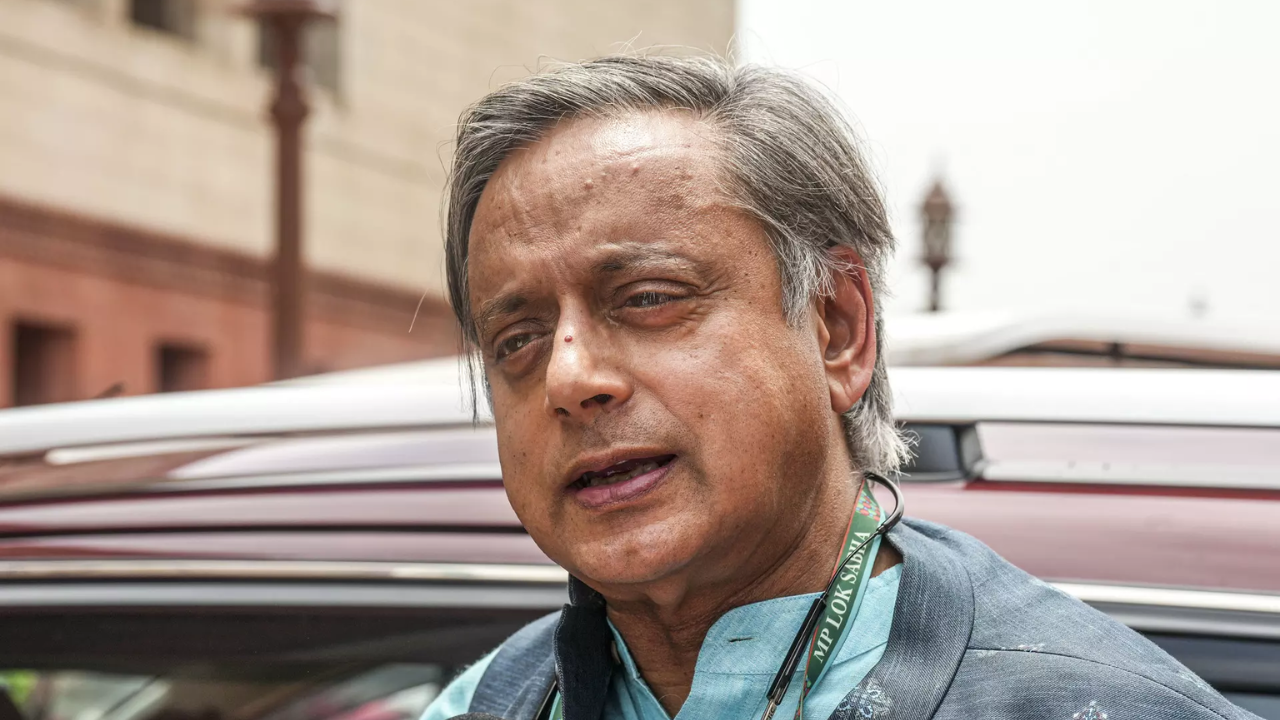
Indian External Affairs Minister S. Jaishankar's recent statement on the West Asia conflict sparked controversy in parliament, with Congress MPs Shashi Tharoor and K.C. Venugopal criticizing the minister's approach to discussing sensitive international issues.
A Flawed Statement: Jaishankar's Criticism Sparks Parliament
The West Asia conflict has been escalating steadily over the past few years, with multiple countries embroiled in a complex web of alliances and rivalries. India, as a key player in the region, has been watching the situation closely, seeking to maintain its strategic interests. However, Congress MPs Shashi Tharoor and K.C. Venugopal felt that External Affairs Minister S. Jaishankar's recent statement on the conflict was not up to par.
The minister delivered a statement in parliament without allowing debate or discussion, which he claimed was necessary due to the urgency of the situation. However, Tharoor and Venugopal were quick to point out that this approach undermines the principles of parliamentary democracy and ignores the need for informed discussion on pressing international issues.
Energy Security and International Law: A Missing Link
The West Asia conflict is deeply intertwined with energy security concerns. As a major oil-producing region, the Middle East plays a critical role in global energy markets. India's dependence on imported oil makes it vulnerable to disruptions in this critical sector. The lack of discussion on energy security issues during Jaishankar's statement has raised questions about the government's commitment to addressing its own energy challenges.
Moreover, international law also plays a crucial role in managing conflicts and resolving disputes peacefully. Despite the growing complexities of global politics, India seems to be lagging behind other major players in this regard. The absence of a clear strategy on international law during Jaishankar's statement has sparked concerns among analysts that the government is not taking a proactive approach to addressing regional instability.
A Need for Transparency and Accountability
Tharoor and Venugopal's criticism of Jaishankar's statement also highlights a broader concern about transparency and accountability in Indian foreign policy. In recent years, there have been numerous instances where the government has claimed to be taking a strong stance on regional issues without providing any concrete evidence or explanation.
Transparency is essential when it comes to international relations. Diplomatic initiatives and negotiations require clarity and openness to avoid misunderstandings and miscommunications. The government's failure to provide adequate information during Jaishankar's statement has raised suspicions about its true intentions and motivations.
The Role of Parliament in Foreign Policy
Parliament plays a vital role in checking the executive branch on matters of foreign policy. It is essential that parliamentarians have access to information and are allowed to participate in debates before decisions are made on critical international issues.
The government's attempt to deliver a statement without allowing debate smacks of authoritarianism. This approach undermines the democratic principles enshrined in our constitution and ignores the crucial role that parliament plays in shaping India's foreign policy agenda.
Future Implications: A Call for Reconsideration
The West Asia conflict is likely to continue escalating in the coming years. India must take a proactive approach to addressing regional instability, engaging with international partners and exploring diplomatic channels for resolving disputes peacefully.
In light of Jaishankar's statement, it is essential that the government reconsiders its approach to international relations. By prioritizing transparency, accountability, and parliamentarian participation, we can ensure that our foreign policy objectives are aligned with national interests and democratic principles.
A Final Word
The controversy surrounding Jaishankar's statement serves as a reminder of the importance of effective parliamentary oversight in India's foreign policy. Tharoor and Venugopal's criticism highlights the need for greater transparency, accountability, and inclusivity in our international relations.
As we move forward, it is crucial that the government takes steps to address these concerns and reaffirms its commitment to democratic principles and inclusive decision-making processes. The fate of India's foreign policy lies in its ability to balance national interests with global responsibilities – a delicate balance that requires careful consideration and nuanced engagement.
We urge our readers to share their perspectives on this issue, exploring how we can ensure that Indian foreign policy prioritizes transparency, accountability, and democratic values.
Comments