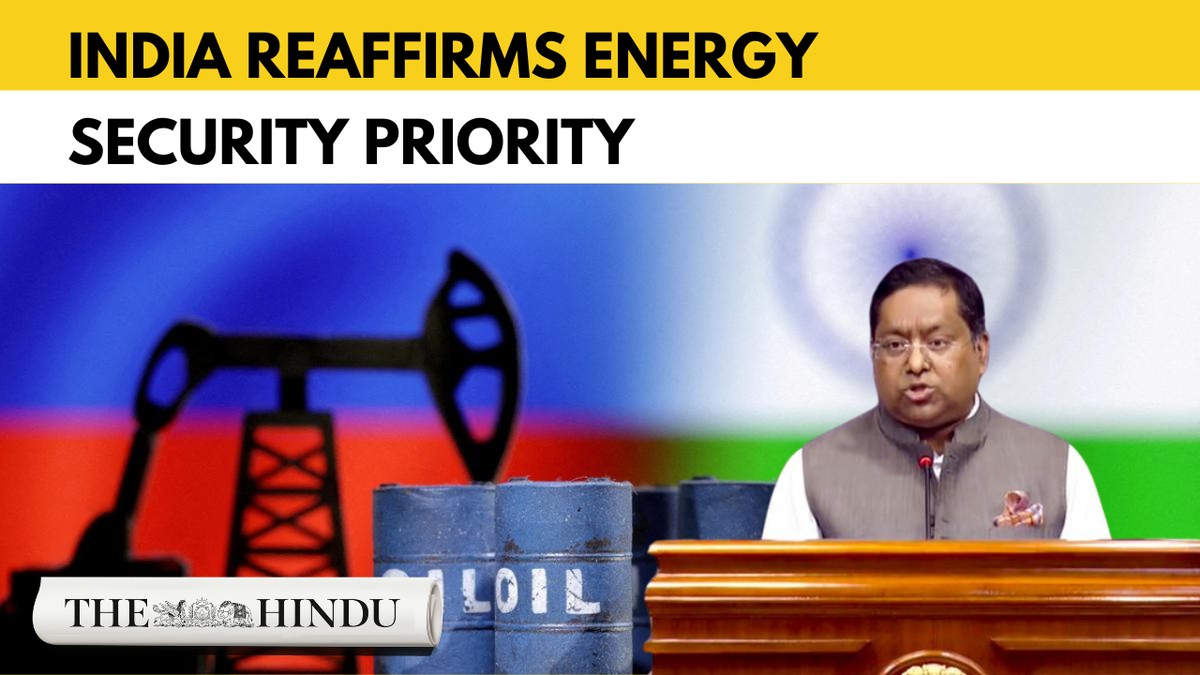
The Indian government has reaffirmed its commitment to ensuring energy security, countering claims made by the United States that India would stop purchasing Russian oil under a new trade deal.
Background: The US Claim
Recently, the White House announced plans for a new trade agreement with Russia aimed at boosting energy exports. However, in the aftermath of this announcement, some officials from the US claimed that the agreement included clauses requiring India to scale down its purchases of Russian oil.
MEA spokesperson Randhir Jaiswal has emphatically rejected these claims, stating that "India's oil sourcing decisions are driven by market conditions and global dynamics, not external pressure."
In a statement released earlier this week, Jaiswal emphasized that India values its ties with both Russia and the US, but prioritizes its energy security needs. He added that the Indian government would continue to pursue fair and transparent trade practices, including those regarding oil imports.
The Reality Behind Energy Security
Energy security is a multifaceted concept that encompasses not just short-term fuel supplies but also long-term fuel sources, technology advancements, and partnerships with other nations. For India, which has emerged as one of the world's fastest-growing major economies, ensuring energy security is paramount.
India’s energy mix is diverse, with oil accounting for around 30% of its total energy consumption. However, as the country seeks to reduce its reliance on imported fuels and bolster renewable energy sources, it must balance competing interests and priorities. The recent US claim underscored this delicate balancing act.
Experts say that while some might view India's continued ties with Russia as a strategic hedge against supply disruptions, the reality is more complex. For instance, India needs Russian oil to meet its import requirements, but also desires closer economic ties with the US to access new energy sources and technologies.
Market Dynamics and Global Implications
The push-and-pull of global trade dynamics means that countries like India must remain vigilant in navigating this treacherous waterscape. With prices for oil fluctuating wildly, India's demand for Russian crude is not merely driven by politics but also economic necessity.
As the energy landscape shifts rapidly due to climate change-induced concerns and technological advancements, India must also prioritize long-term investments in renewable energy. As a rapidly developing nation, it faces significant challenges in fueling its economy while reducing carbon emissions.
However, it would be premature to dismiss the recent developments outright, as they underscore the evolving role of Russia and US in shaping global energy relationships. India should remain open-minded and engaged in these discussions, balancing strategic partnerships with a clear-eyed commitment to national interests.
A Balance Between Strategic Partnerships and Energy Security
Given its position on the Asian continent, India is strategically positioned to balance competing demands from multiple nations while pursuing its energy security objectives. This delicate dance will be crucial in years to come as global dynamics continue to shift.
The Indian government has demonstrated a commitment to sustainable development and renewable energy initiatives. With China's Belt-and-Road Initiative focusing on regional infrastructure development, India should focus on strengthening regional collaborations that prioritize shared goals like climate action and sustainable resource management.
The recent claim by US officials regarding India's Russian oil imports underscores the need for sustained diplomatic efforts and strategic thinking in managing global relationships. To achieve its national objectives while promoting long-term stability, India needs to adapt its approach to trade negotiations and partnerships with key nations.
Future Outlook
The Indian government has reaffirmed its focus on energy security. Rather than letting claims by other countries overshadow this priority, they should continue pushing forward with measures designed to boost domestic production and diversify import sources.
As India charts its path forward in the rapidly changing global landscape, staying true to its core values – from diplomatic engagement to long-term strategic thinking – will be essential. The stakes are high, but it is through careful planning that this nation can emerge as a powerhouse of sustainable growth and energy security.
The road ahead for India's energy policy remains fraught with challenges, but the firm stance taken by MEA officials offers hope that this commitment to energy security will prevail. As one of the world's leading emerging economies, it is crucial that India continues navigating this complex landscape while maintaining its steadfast focus on sustainable development.
Comments