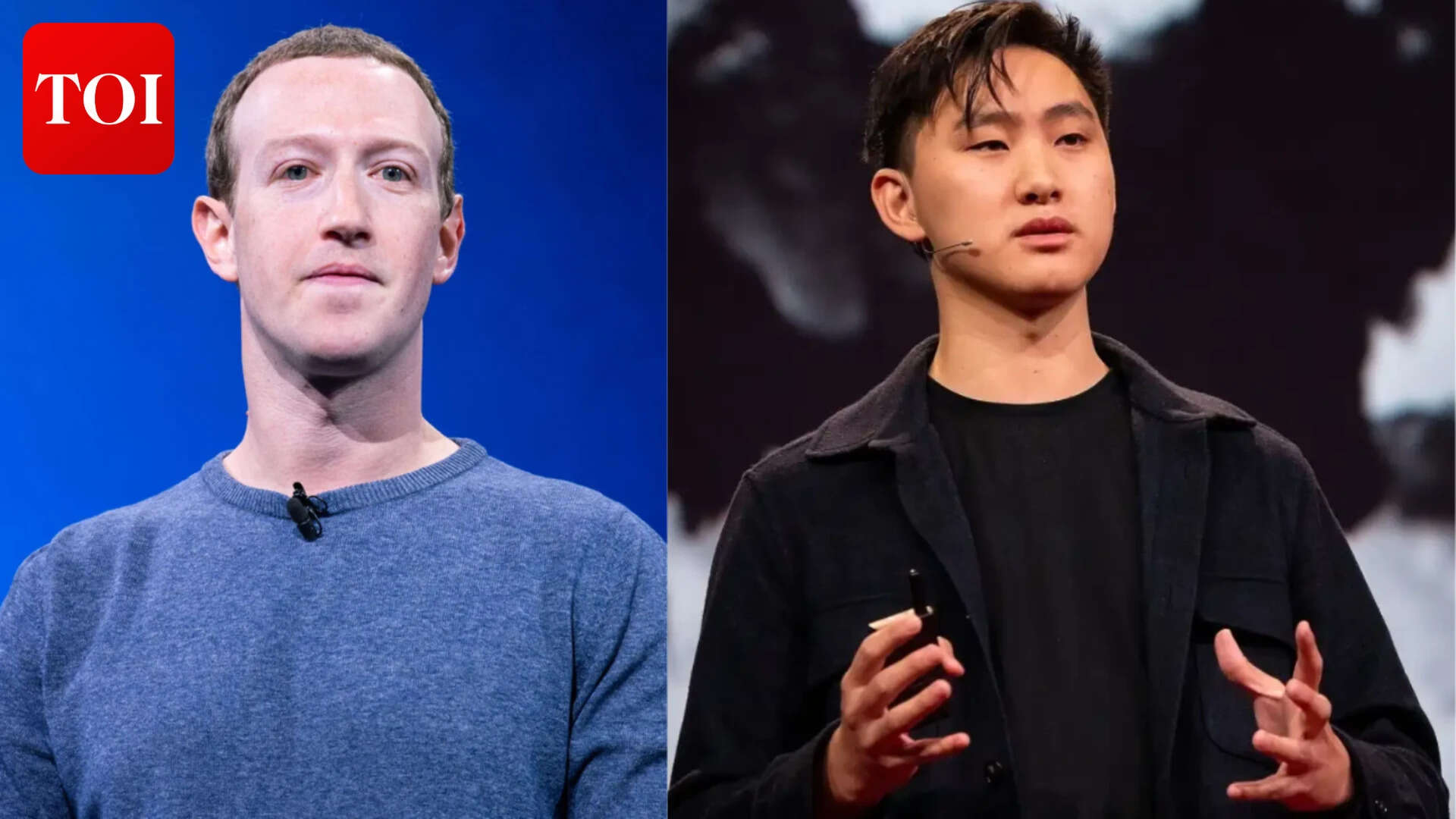
Meta CEO Mark Zuckerberg has quietly dismantled the company's highest-paid employee, Alexandr Wang, in a major reorganization nine months after his $14 billion hire.
Alexandr Wang, 28, was brought on board as part of Meta's ambitious efforts to build advanced AI models. At the time of his hiring, it was reported that he would oversee the development and deployment of these models across various platforms.
However, sources close to the matter have revealed that Wang's power has been quietly stripped away, with a new applied AI engineering organization under Andrew Bosworth now in control. This shift suggests that Meta CEO Mark Zuckerberg's bet on Wang's vision may already be paying dividends - or failing miserably.
The Rise of Alexandr Wang
In July 2022, Meta announced the $14 billion acquisition of a data labeling company founded by Alexandr Wang. The young entrepreneur was hailed as the future of AI development, with his expertise in data labeling and AI model training being crucial to Meta's plans.
Wang's title was upgraded to that of Vice President of Applied Machine Learning Research, with his team overseeing the development of advanced AI models for various applications. His appointment sent shockwaves through the tech industry, with many analysts predicting a significant shift in Meta's AI strategy under his leadership.
The New Applied AI Engineering Organization
However, sources have revealed that Wang's influence has been curtailed in favor of a new applied AI engineering organization led by Andrew Bosworth. The 48-year-old engineer is responsible for overseeing the development and deployment of AI models across various platforms.
Bosworth's team now routes talent and data pipelines around Wang entirely, with researchers directly reporting to him rather than the former top executive. This shift in power dynamics suggests that Zuckerberg may be seeking to reign in the ambitions of his younger colleagues and focus on more tried-and-true strategies for AI development.
The Context: Meta's AI Ambitions
Meta has long been one of the most aggressive players in the AI game, with a multi-billion dollar investment in advanced machine learning research and development. However, the company's AI ambitions have also been fraught with controversy, particularly around issues of bias and cultural appropriation.
In recent years, Meta has faced significant scrutiny over its AI-powered moderation tools for user-generated content, with human rights groups accusing the company of perpetuating problematic biases in its algorithms. The incident led to a major overhaul of the company's moderation policies, with Zuckerberg personally apologizing for the mistakes.
Despite these challenges, Meta remains committed to building cutting-edge AI models, with researchers working on everything from sentiment analysis to natural language processing. However, the reorganization of Wang's team raises questions about the direction of this research and whether it will align with the company's core values.
The Future Implications
The dismantling of Alexandr Wang's influence suggests that Meta is taking a more cautious approach to AI development, focusing on tried-and-true strategies rather than bold new initiatives. This shift may have significant implications for the company's future success in the field.
On one hand, by cutting ties with a high-profile executive who has faced criticism over his role in shaping Meta's AI policies, Zuckerberg may be signaling that the company is committed to doing better in terms of diversity and inclusion. On the other hand, this move could also indicate that Meta is struggling to find its footing in the rapidly evolving world of AI.
One thing is clear: the reorganization of Wang's team marks a turning point for Meta's AI ambitions. As the company moves forward, it will be interesting to see how Zuckerberg balances the need for innovation with the imperative to address issues around bias and accountability.
The Takeaway
Meta's decision to dismantle Alexandr Wang's influence is a fascinating example of how the tech industry is evolving in response to changing circumstances. As we move forward, it will be crucial to keep a close eye on developments at Meta and other major players in the AI game.
The question now is: what does this mean for the future of AI research? Will Meta revert to its old strategies, or will Zuckerberg opt for a more measured approach that prioritizes caution over bold experimentation? Only time will tell, but one thing is certain - the stakes are high, and the world is watching.
As we look ahead to an increasingly AI-driven future, it's clear that Meta's next move will have significant implications for global affairs. Will the reorganization of Wang's team mark a turning point in the company's fortunes, or will it signal that Meta's biggest bet has already failed? The answer may lie in the details, but one thing is certain: the world will be watching with bated breath as Facebook's AI ambitions continue to unfold.
Comments