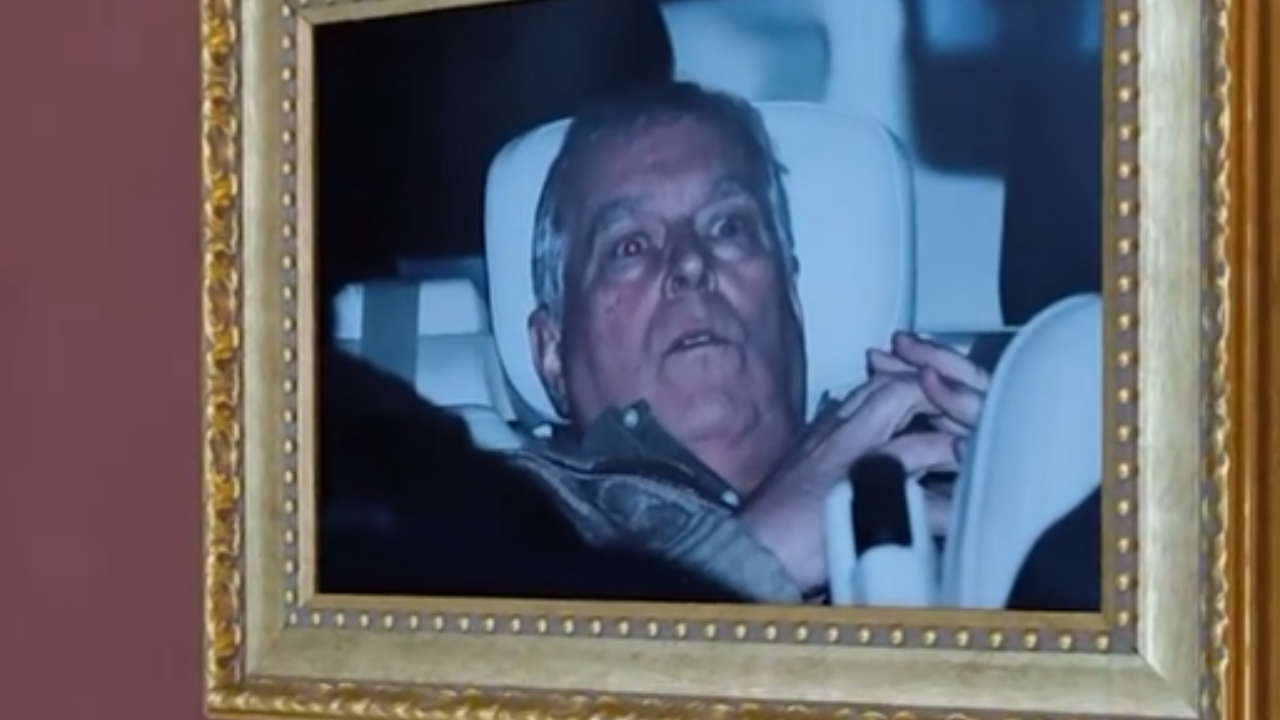
A daring stunt at the Louvre Museum in Paris has sent shockwaves through the art and activist communities, as a British activist group, 'Everyone Hates Elon,' hung a framed photo of ex-Prince Andrew inside the esteemed institution's walls.
Frame of Reference
The image in question was captured after Prince Andrew's arrest on misconduct charges related to his association with Jeffrey Epstein, a wealthy financier who was convicted of sex trafficking minors. The photograph shows the prominent royal figure looking visibly anxious, his face contorted in a mixture of discomfort and embarrassment.According to eyewitnesses, the group arrived at the museum during late evening hours, avoiding security personnel and making their way to a high-ceilinged room reserved for special exhibitions. Using a combination of glue and makeshift support structures, they discreetly hung the frame from the ceiling, before swiftly removing themselves from the scene unnoticed.
The 'Everyone Hates Elon' Group
The activist group behind this stunt has been gaining significant attention in recent months, following a series of provocative interventions across Europe. Their motivations appear to be rooted in their disdain for perceived injustices and corporate interests, as well as their strong stance against the rapidly expanding influence of artificial intelligence.Their chosen target in this instance is Prince Andrew, whose association with Epstein has sparked heated debates about accountability, entitlement, and the limits of power. Critics argue that the royal family's willingness to shield members from scrutiny amounts to systemic corruption – a notion that aligns with the 'Everyone Hates Elon' group's broader stance on technology's capacity for perpetuating societal ills.
Historical Context: Epstein's Scandal
The unfolding drama surrounding Prince Andrew and his friend, Jeffrey Epstein, highlights disturbing patterns of complicity within influential circles. As an individual known to have entertained high-society connections, including those with ties to the British royal family, Epstein played a pivotal role in cementing his reputation as both a financier and a socialite.However, it was in 2008 that allegations against Epstein first emerged, primarily targeting his abuse of underage girls under the guise of 'masseuses' in New York. As accusations piled up, an ever-growing web of secrets surrounding his clientele began to surface – claims many now argue amount to conclusive proof of a disturbing cover-up involving those within power.
The Stunt's Significance
What is often overlooked about this stunt is its nuanced commentary on the ongoing, high-stakes battle between transparency and complicity among global elite networks.At its core, 'Everyone Hates Elon' seeks to draw attention to issues stemming from systemic failure – be it through economic manipulation or outright disregard for individual rights. Given the escalating power dynamics surrounding artificial intelligence, this stunt appears to hold particular significance.
The AI Conundrum
As the rapidly expanding world of artificial intelligence raises crucial questions about accountability and human agency within complex systems, some argue that its continued development poses an existential threat. For the 'Everyone Hates Elon' group, such concerns underscore the need for greater societal awareness regarding technology's far-reaching consequences.Their efforts are part of a broader movement pushing back against AI-driven monopolization and advocating for greater transparency – or in this case specifically targeting corporate figures who fail to take responsibility for their actions.
Comments