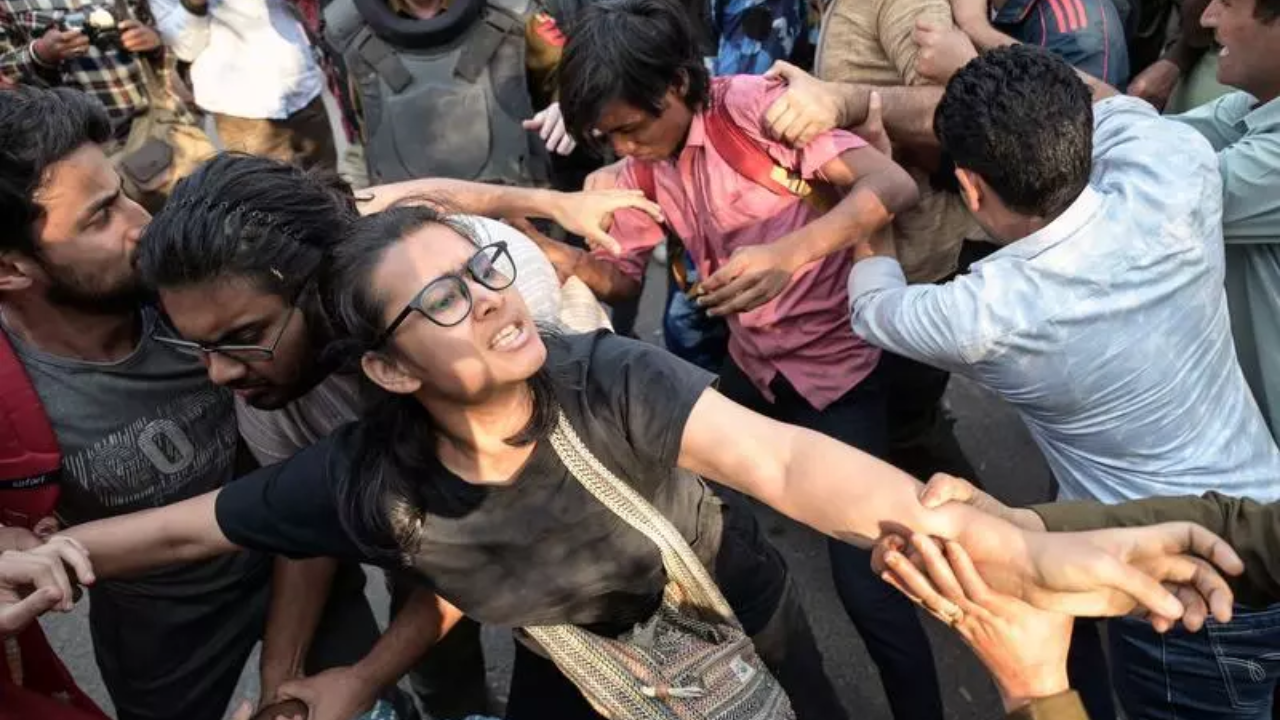
The streets of New Delhi's Jawaharlal Nehru University (JNU) were abuzz with tension yesterday evening, as students clashed with police over an alleged casteist remark by the university's Vice-Chancellor, Santishree Dhulipudi Pandit. The protest, which began as a peaceful demonstration, turned violent when students broke open the locked main gate, throwing stones and sticks at the police. Several students were detained, while both parties reported injuries.
Background of Casteism Allegations
The controversy surrounding Vice-Chancellor Pandit stems from her alleged casteist remarks during a recent academic conclave. According to eyewitnesses, Pandit is said to have made disparaging comments about certain communities during the event. The JNUSU (Jawaharlal Nehru University Students' Union), which represents over 50% of the university's student body, alleged that these remarks were a thinly veiled attack on Dalit students.
The controversy snowballed into a full-blown protest, with students demanding an apology from Pandit and calling for her resignation. The JNUSU organized a rally against the VC, which was attended by hundreds of students, mostly from marginalized communities. The university administration refused to allow the students to march towards the education ministry, leading to the clash with police.
The Significance of Casteism in Indian Universities
Casteism has long been a contentious issue in India's educational institutions. Many universities, including those of the India's most prestigious public and private institutions, have witnessed outbreaks of caste-based violence over the years. The recent JNUSU protest highlights the struggle for marginalized communities to secure equal opportunities and representation in these hallowed halls.
The National Commission for Minority Education (NCME), an autonomous body under the Ministry of Human Resource Development, has been actively engaged with universities across India to address issues related to caste-based discrimination and marginalization. According to NCME's website, over 50% of the students who reported instances of casteism in educational institutions were Dalit students.
The implications of casteism are far-reaching and profound. Not only does it create a sense of exclusivity among students from dominant castes, but it also results in a lack of diversity and creativity in academia. Furthermore, the perpetuation of caste-based stereotypes can have long-term effects on future generations, restricting their access to opportunities and social mobility.
Police Response: A Matter of Contention
The police response to the protest has been widely criticized by student unions and activists. While the university administration claimed that students did not obtain permission for their rally, eyewitnesses refute this claim, stating that permission was granted. The police have also been accused of using excessive force against protesters.
Experts argue that the over-reliance on Section 144 of the criminal code – which bans assembly and public gatherings – has become a primary tool employed by the police to suppress dissenting voices in India's educational institutions. This tactic results in the erasure of students' rights, silencing their voices, and preventing them from pursuing their academic interests freely.
Historical Precedents and Institutional Reforms
The struggles of marginalized communities at JNU have parallels with incidents that took place on campus over 40 years ago. In the early 1980s, radical student groups clashed with the police, demanding greater representation for Dalit students in university institutions. Although these protests resulted in concrete reforms, including the creation of specific quotas and affirmative policies, similar struggles resurface every decade.
Recent events at JNU underscore the need for significant institutional reform. The National Democratic Alliance (NDA) government has emphasized the importance of inclusivity, diversity, and social cohesion. Reforms such as creating more representation for marginalized groups on university governing bodies have already started to bear fruit in Indian institutions.
Future Implications: Education and Social Justice
The JNU protest serves as a microcosm of the broader conversations taking place around social justice, education, and caste-based discrimination in India. The government's National Education Policy (NEP), 2020 – aimed at creating an inclusive and diverse educational landscape – has gained significant attention for its emphasis on affirmative action policies.
However, critics argue that these measures are insufficient to address the deeply entrenched nature of casteism. Only through sustained efforts – including addressing systemic inequalities, promoting nuanced awareness, and fostering a culture of empathy – can Indian institutions truly ensure equal opportunities and social mobility for marginalized communities.
Detention of Students: A Concerning Reality
The detention of students by the police has brought forth concerns regarding their safety, well-being, and human rights. India's National Human Rights Commission (NHRC) has issued notices to the government over the mishandling of protests on university campuses in recent years.
Students and Policymakers: A Call for Representation
The struggle of JNU students serves as a testament to the need for better representation among marginalized communities. As policymakers continue to grapple with issues of caste-based discrimination, education, and social justice, student voices must be amplified.
While Vice-Chancellor Pandit faces an uncertain future, it is essential that policymakers and administrators recognize the significance of these protests as a call to re-examine India's educational institutions. A nuanced understanding of this complex issue – which combines technology, pedagogy, diversity, and institutional reform – will undoubtedly require sustained engagement over time.
The protesters' demand for an apology from Vice-Chancellor Pandit raises questions about the accountability of those in power who perpetuate social injustices in academia. As educators and policymakers strive towards a more inclusive educational landscape, we must prioritize empathy, listening, and understanding to foster meaningful change – change that will lead our institutions closer to true representation of marginalized communities.
Comments